
Home / Ice Hockey
Ice Hockey
Spokane Chiefs goaltender Carter Esler aims to prove doubters wrong despite his small stature
The WHL goaltender, who is 5-foot-10, says he has been told his whole life that he is too small, and he plans to use that criticism as motivation as NHL scouts weigh his future.
On the Ice Editorial Team
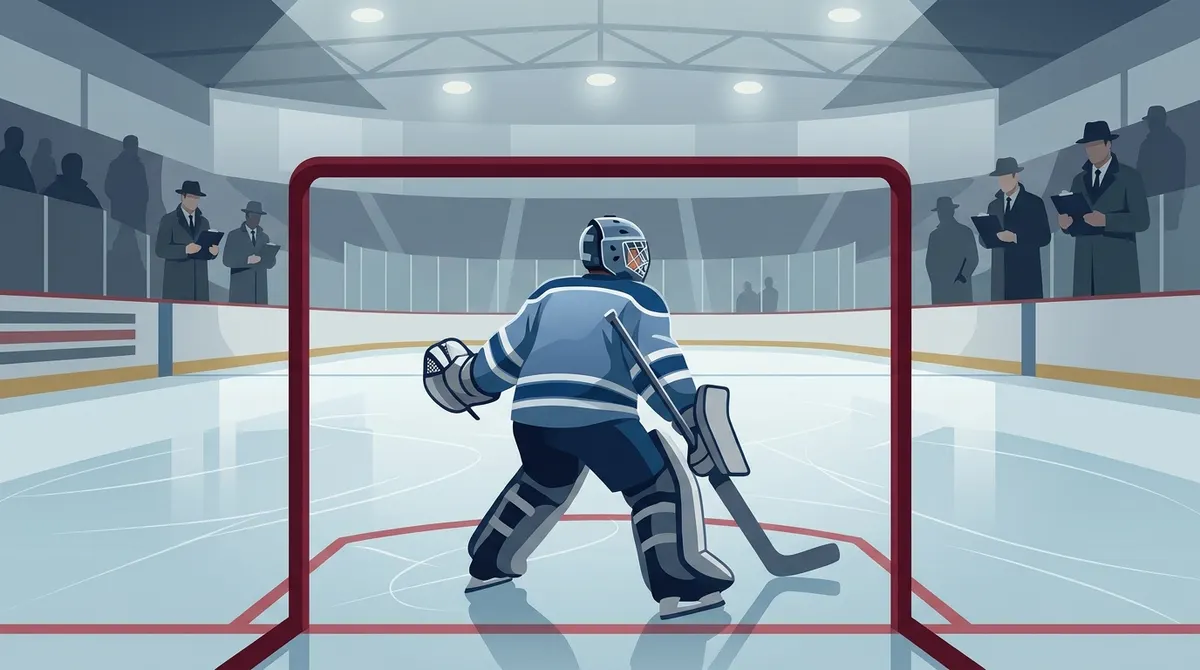
Carter Esler, a goaltender for the Spokane Chiefs of the Western Hockey League, a Canadian junior league, is viewed skeptically by NHL scouts because of his height. Esler stands 5-foot-10 (about 178 centimeters), which is small for a goalie. He will turn 18 on Nov. 28.
Esler said he has been repeatedly told throughout his life that he is not tall enough and is too small to succeed. He does not accept that assessment. “I’ve been told my whole life that I’m too small to make it. I have something to prove to people who think I can’t,” he said, turning the criticism about his size into motivation.
Goaltenders defend the net, wearing heavy protective equipment and using specialized sticks. Because attacking players are kept out of the crease in front of the goal, goaltenders rely especially on quick reactions and positioning. Body size has long been considered one factor in how well a goalie can defend the net.
The WHL is made up of teams from western Canada and the northwestern United States and is one of three leagues in the Canadian Hockey League (CHL), Canada’s major junior system. Teams that win the playoffs advance to the Memorial Cup, the CHL championship. For young players, the league is an important stage on the path to professional hockey.
Scouts preparing for the NHL draft evaluate players’ height and weight along with their skill and decision-making. Size is weighed especially heavily for goalies, so smaller players are expected to show not only their skills but also how they compensate for their physical disadvantages.
Although size can be a barrier to evaluation, some goalies who were small have still earned high ratings in the past. In Esler’s case, the focus will be on how scouts ultimately judge him after weighing both his talent and his size.
The debate reflects a long-running question about goaltender size. The impact of body size on play has been judged differently as players’ skills and tactics have changed. Esler’s case may also serve as a way to consider how those evaluations have shifted.
For Esler, the key points going forward will be whether he can make consistent saves through the season and whether he can overturn doubts about his size with results on the ice. Whether the determination he has expressed will translate into a positive evaluation remains to be seen.
Source CHAT News Today
More news
All news
Ice Hockey
Islanders' prospect Danil Prokhorov loaned to Dynamo Moscow of the KHL
The 19-year-old winger will play in Russia after appearing in 19 AHL games this season.
On the Ice
Ice Hockey
Islanders' Kyle Palmieri out for rest of season with right knee injury
The 35-year-old forward is expected to miss the remainder of the regular season after injuring his right knee.
On the Ice

Figure Skating
Shin Ji-a takes second at NHK Trophy, nearing first senior Grand Prix medal
Shin Ji-a finished second at the NHK Trophy Grand Prix event, getting closer to her first senior Grand Prix medal.
On the Ice
Ice Hockey
Western Japan Masters ice hockey tournament opens in Kumamoto for players 50 and older
Players from Kyushu, Chugoku-Shikoku and Kinki are competing at Aqua Dome Kumamoto through Dec. 29.
On the Ice